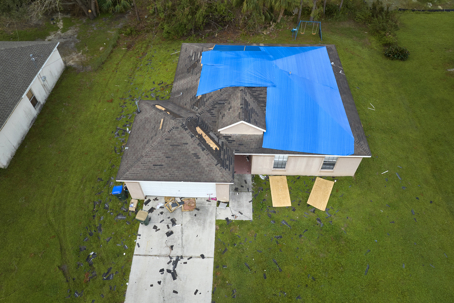
A late-summer hurricane does not have to make landfall in Charlotte to ruin a shingle roof. One night of strong inland wind and sideways rain can quietly shorten your roof’s life or set up the next leak. You might walk outside the next morning, see all your shingles still in place, and still have a nagging feeling that something is not quite right overhead.
Homeowners across the Charlotte area face this same concern every hurricane season. Our weather forecast talks about tropical storm remnants, gusty bands of rain, and flash flood watches, but usually not the specific impact on your roof. You care less about the storm’s exact category and more about whether the roof over your family and belongings stood up to the stress, or whether it took damage that will surface in the next heavy rain.
At Steele Restoration, we work on shingle roofs in Charlotte and across the Carolinas every hurricane season, from minor wind damage to full storm restoration projects. We see the same patterns of hurricane-related roof impact again and again, and we understand how insurance carriers often look at those claims. In this guide, we share how these storms really affect Charlotte shingle roofs, what damage most homeowners miss, and which steps protect both your home and your insurance claim.
How Charlotte Hurricanes Really Affect Shingle Roofs
Charlotte does not feel a hurricane the same way Wilmington or Charleston does, but our roofs still take a beating. When a hurricane or strong tropical system pushes inland, it often brings bands of high wind and heavy, wind-driven rain into the Charlotte area. These storms can produce strong gusts that slam into roofs from changing directions over several hours, then soak them with rain that comes in sideways instead of straight down.
Shingle roofs are especially sensitive to wind uplift. As wind moves over your roof, it creates lower pressure on the surface compared to the air underneath the shingles. That pressure difference tries to pry the shingles upward, particularly at the edges, ridges, and any place the surface changes shape. Even if shingles do not tear off that night, repeated lifting can break the bond of the adhesive strip on the shingle and weaken the shingle itself.
Wind-driven rain causes a different kind of trouble. In a normal shower, water mostly runs straight down and off the roof. Under hurricane conditions, strong winds can push rain up under shingle edges, into metal flashing joints, and along roof-to-wall intersections. Areas that never leak during a regular thunderstorm, such as chimneys, skylights, and sidewalls, can start taking in moisture when rain is forced sideways against them for hours.
From years of inspecting Charlotte roofs after these storms, we know the impact often shows up first in very specific zones. Eaves, rakes, ridge caps, valleys, and areas around penetrations like vents and pipes tend to be the most vulnerable. Even when the roof looks generally fine from the driveway, those sections can tell a very different story once a trained eye gets close.
Why Some Charlotte Roofs Fail in Hurricanes While Others Hold Up
After a storm rolls through Charlotte, one of the most common questions we hear is, “Why did my roof get torn up when my neighbor’s looks fine?” The answer is rarely simple bad luck. Performance in hurricane-level wind and rain usually comes down to how the roof was installed, how old it is, and what kind of maintenance it has seen over the years.
Installation quality plays a huge role. Shingles have manufacturer wind ratings that assume they were nailed in the correct locations, with the right nail length, and with enough fasteners per shingle. If the installer missed the nail line, under-nailed, or over-drove the nails, that shingle is much more likely to lift or blow off in high winds. Starter strips at the eaves and rakes are especially important, because they anchor the first row of shingles that faces the wind.
Age and wear matter just as much. Asphalt shingles rely on a factory-applied seal strip that heats and bonds to the shingle below. Over time, sun, heat cycles, and debris can weaken that seal. Older shingles become more brittle, so when wind lifts them they are more likely to crease or crack instead of flex and return. A roof that was already near the end of its service life before hurricane season is more likely to suffer storm-related damage than a newer, well-maintained roof.
Under the shingles, the condition of the underlayment and roof decking affects how the system behaves under stress. Sound decking gives fasteners something solid to grip. If the decking has begun to soften from past moisture or poor ventilation, nails can pull out more easily during uplift. Adequate attic ventilation helps control heat and moisture, which keeps decking drier and reduces the risk of hidden rot that might not be obvious from the outside.
At Steele Restoration, our crews follow manufacturer installation guidelines and hold certifications from respected roofing manufacturers. In practice, that means we pay close attention to nail placement, starter courses, and edge details that can make the difference between a roof that sheds hurricane winds and one that loses key sections. When we inspect storm-damaged roofs in Charlotte, we often see wind failure begin where corners were cut during installation years earlier.
Hidden Hurricane Roof Damage Most Homeowners Miss
Many Charlotte homeowners step outside after a storm, look up, see no missing shingles, and assume their roof escaped without damage. Unfortunately, some of the most serious hurricane-related issues are subtle. They might not cause an immediate leak, but they can shorten your roof’s life or set up a future failure during the next storm.
One of the first things we look for is creased shingles. When wind lifts a shingle tab and bends it backward, it can create a visible crease line along the top of the tab. From the ground, the shingle may appear to be lying flat again, but up close you can often see the bend. That crease means the fiberglass mat inside the shingle has been broken or weakened. Even if it is not leaking today, that shingle has lost much of its long-term strength.
We also find many shingles that have lifted enough to break the adhesive seal without fully creasing. These shingles often have a slight shadow line along the bottom edge or feel loose when gently lifted during an inspection. Broken seals make it easier for future winds to get under the shingle and tear it off, and they also create a path for wind-driven rain to reach the nails or underlayment below.
Granule loss is another hidden sign of hurricane impact. Asphalt shingles are coated with mineral granules that protect the asphalt from sunlight and add fire resistance. Strong wind and wind-driven rain can strip granules, especially on older roofs and on the windward slopes. After a storm, we often find piles of granules in gutters, at downspout outlets, or scattered on hard surfaces around the home. That loss might not cause a leak right away, but it speeds up the aging process of the shingles in those areas.
Inside the home, hurricane damage sometimes shows up gradually. New water stains on ceilings or walls, damp insulation in the attic, or a musty odor after a storm can signal that wind-driven rain found a path in. Because this moisture often follows framing or runs along the underside of the decking, the leak may not appear directly under the entry point on the roof, which is why a systematic inspection is so important.
During our post-storm inspections in Charlotte, we routinely uncover combinations of these issues on roofs that looked fine from the street. We document creasing, uplift, granule loss, and subtle flashing problems with close-up photos so homeowners and insurance adjusters can clearly see the storm’s impact, even when the damage is not obvious from the ground.
How Professional Roof Inspections Capture Hurricane Damage
A professional roof inspection after a hurricane goes far beyond a quick glance from the driveway. For us, it is a systematic process that focuses on the parts of a shingle roof that hurricane winds and wind-driven rain stress the most. That level of detail is what allows us to find problems early and document them clearly.
We typically begin with the perimeter, checking eaves, rakes, and gutter lines for signs of uplift, damage to starter courses, and any loosened drip edge metal. From there, we move carefully over each slope, looking closely at shingle surfaces for creases, broken or missing corners, and areas of concentrated granule loss. We gently test some shingles in suspected zones to see whether the adhesive seal has broken, which is something a homeowner cannot safely do from the ground.
Flashing and penetrations receive special attention. We examine step flashing along roof-to-wall intersections, counterflashing on chimneys, and metal around skylights for bending, gaps, or displaced sealant that can result from wind pressure. Pipe boots and vents are checked for cracks or movement that might have occurred when gusts hit them. In the attic, we trace any signs of moisture back toward potential entry points on the roof, which can reveal a storm-related leak path that is not obvious from the exterior.
Throughout this process, we take detailed photos and notes. We document where on the roof each issue occurs, which slopes were most directly exposed to the storm winds, and how the damage pattern compares to normal wear. That level of documentation matters a great deal if you choose to file an insurance claim. It gives you and the adjuster a clear record of the roof’s condition shortly after the storm, before sun and foot traffic have changed how the damage looks.
At Steele Restoration, our owner and core team stay directly involved in these storm inspections rather than sending in temporary crews. Our background in the insurance industry shapes how we structure our findings and communicate them. We understand the kind of detail and clarity that helps insurers recognize that a problem came from a specific storm event rather than slow deterioration, and we build our inspection reports around that understanding.
Steps To Strengthen Your Charlotte Roof Before Hurricane Season
Waiting until after a hurricane hits Charlotte is not your only option. There are several steps you can take before storm season to strengthen a shingle roof, reduce the chance of serious damage, and make any future insurance claim easier to support. These measures are especially valuable if your roof is older or you know it has had minor issues in the past.
A smart first move is a pre-season roof inspection. For many roofs, we find small problems that are simple to correct but could cause big trouble in hurricane conditions. That includes loose or poorly sealed flashing around chimneys and sidewalls, exposed or backed-out nails along ridges and vents, and isolated shingles that are already cracked or missing granules. Fixing those issues before high winds hit closes off easy entry points for wind-driven rain and reduces weak spots that uplift can exploit.
In some cases, upgrades aimed at wind resistance make sense. Installing or improving starter strips at eaves and rakes helps lock down the first course of shingles, which is the front line against uplift. On certain roofs, adding fasteners in critical edge zones or improving attic ventilation can also contribute to better performance under stress by keeping decking dry and ensuring nails stay well seated. The right approach depends on your specific roof design and condition, which is why a tailored inspection is important.
Outside the roof system itself, managing nearby trees and debris can reduce hurricane impact as well. Branches that overhang the roof can break and puncture shingles or decking, even in an inland storm. Loose items in the yard can become projectiles in strong winds, striking the roof surface or damaging gutters. Keeping gutters and downspouts clear before storm season also helps water drain quickly instead of backing up under the edge shingles during intense rainfall.
When Steele Restoration performs this kind of preventive work, we do it with the same manufacturer-backed installation practices we use on full replacements. Our three-year labor warranty covers the workmanship on repairs and reinforcements, so if an issue related to our work shows up in a future storm, you are not left dealing with it alone. For many Charlotte homeowners, that warranty and our local, non-storm-chasing presence provide extra confidence going into each hurricane season.
Protect Your Charlotte Roof Before & After The Next Hurricane
Hurricanes and tropical systems may hit the coast first, but their impact on shingle roofs in Charlotte is real. Wind uplift, wind-driven rain, and hidden weaknesses in shingles, flashing, and decking can combine to create damage that is easy to miss at a glance yet serious for your roof’s long-term health. The good news is that with the right inspections and timely repairs, you can catch many of these problems early and put your home in a stronger position for the next storm.
You do not have to climb a ladder or become a roofing professional to get that peace of mind. Steele Restoration offers free, hurricane-focused roof inspections and clear, written estimates for repairs or replacement. Our local team, including our hands-on owner, has years of experience with Charlotte storm damage and understands how to document issues in a way that supports you if you decide to involve your insurance company. If you are concerned about how the last storm affected your roof, or want to prepare before the next one, we are ready to help.
Call (980) 485-5508 to schedule your Charlotte hurricane roof inspection with Steele Restoration.